

"Hey Donkey. It's time we learn another language"
Ok Shrek, choose one below. Me, I'd like to learn Urdu.
|
|
  Learn 119 Different Languages Here/Rich! Learn 119 Different Languages Here/Rich!
 nota bene: A webmaster multilingual favorite site. Great sites and many with sound. Word2Word is pleased to provide these links in the hope of all people developing a better understanding of others through the use of language. We have attempted to place as many online courses at your disposal as possible. nota bene: A webmaster multilingual favorite site. Great sites and many with sound. Word2Word is pleased to provide these links in the hope of all people developing a better understanding of others through the use of language. We have attempted to place as many online courses at your disposal as possible.
Arabic, Belgian, Bulgarian, Canadian, Chinese, Croatian, Danish, Dutch, English, Finnish, French, Galician, German, Greek, Hebrew, Hindi, Hungarian, Indonesian, Irish, Italian, Japanese, Korean, Latvian, Lithuanian, Lojban, Malaysian, Moldavan, Persian, Portugese, Polish, Romanian, Russian, Serbian, Slavonic, Slovenian, Slovakian, Spanish, Swahili, Swedish, Thai, Tamil, Taiwanese, Turkish, Uganda, Ukranian, Valencian, Vietnamese, Welsh, Yiddish.
nota bene: Another webmaster preferred site.

The Travel Linguist
Whether you want to master another language or just learn a few words for travel, we've got the language learning tools for you. You will have to search for the one that you want to learn. It is fun learning everyday expressions in several NEW languages.
-

Learn 8 Different Languages here on this site
Words, Dictionary, Verbs, Phrases, Forum, a Blog and more. Learn a language right here with hundreds of free language-learning lessons, games, and activities. Join us and have some fun.
What would you like to study ?
The Internet Polyglot

Lingo Hut
A fun means to learn six different languages
The Linguist List
Learning Languages other than English.
L-Lingo
Arabic, Mandarin, Hindi, Japanese or more w/video and sound. This site caters to several Asian languages.
A Webmaster Choice Site
Maplandia from Google
Welcome on maplandia.com! Maplandia.com provides the searchable world gazetteer based on Google Maps, the most comprehensive online satellite imagery ever available. More than 2 000 000 places all over the world are divided into many geographical categories according to continents, countries and administrative regions.This is an awesome addition to this homepage site. Do check it out.
The Language Menu
--A free teacher's site with 17 tools to make worksheets with or without pictures in 33 languages.
N.B. This website was created by language teachers for language teachers.

The Ultimate Vocabulary Trainer
A barrel of language links from the UK
Celebrate Multiple Languages here
A site taken from my Best Japanese Websites worth sharing here.
Hatsune Miku Live Party in Sapporo 2011
The sight of thousands of screaming fans waving glow sticks while the the holograph "performs" on stage is straight out of a science fiction novel. It's kinda long but fun.
Hatsune Miku World is Mine Live [HD]
If you liked that one, her she is again. Awesome special effects and a wild crowd always.

Care to view my Best Japanese Websites? Arigato
Practical FL Learning Tips

Wikimapia
A super means of viewing the entire world up close
Internet 4 Classrooms/multiple language site
Free online language dictionaries.
And here is an OnLine Dictionary
It will provide many versions of the word you select to look up. The WordReference Dictionaries are free online translation dictionaries. The most popular dictionaries are the Spanish Dictionary, French Dictionary and the Italian Dictionary.
Word Reference Site
On-line French, Spanish, Italian Dictionary

Cosmo Trainer
Learn new words in several different languages here/nice site.
Language Exchange via E-mail, Text Chat and Voice Mail
Financial Times Currency Converter
A strong source for money information.
Linguanaut/ 50 languages all FREE

Lang-8
Lang-8 is a SNS (Social Networking Service) site for language exchange and international communication.

Langenberg
Words and phrases in several languages
Majstro Translation Dictionary
Powerful and multifaceted
Word Reference
Language Dictionaries for 6 languages
Surface Languages
Learn Dozens of Language Phrases w/sound
American Sign Language Website
Education...one sign at a time
Tips for Learning Another Language
From ie language / a great site
General Language & Multilingual Sites/Dozens of them!

Want to Learn to Read Hieroglyphics?
So you want to write like an Egyptian, huh? Well it took several years for aspiring scribes to learn how to do it, so for the sake of time we'll just cover the basics on this link. A Dean at my University could read Hieroglyphics. I was so impressed. Not many folks can do that, she could.

|

With all Jim's websites on this site,
Shrek can leap over Donkey in 32 Languages
|
|
Christian The Lion - Reunited - From "The View"
It's a true animal love story. The ending is neat.


"Fear those who are afraid of you"


I am stirring up words in your new language.


Tin Tin Trailers - Dozens of them. Enjoy!
Four language drills French, Spanish, Portuguese and English.
All the lessons on this website are free, according to your native language, you can click on the link you want to learn French, Spanish or Portuguese.
Languages Online Four different languages are on this site.
If you liked the one above, try this one as well. jeb
Languages of the World Quizzes

Vistas in Education Travel and Family Stay Programs
I know this program personally and have traveled with VIE a dozen times. jeb
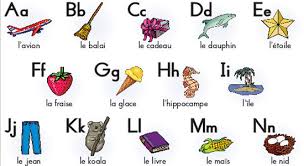
Know any of these words?
|
|
|
|
|
|
"On the day of victory no one is tired"
|
-



-
Best Language Websites

Note that Google rates this site at #5.
-
VidiaLingua
Learning languages just got a lot easier. Bringing Language Apps to Life.
-
Mama Lisa's World
Mama Lisa's World, a place for songs, rhymes, and traditions from across the globe for both kids and grown-ups. Great New Discovery.
-
UNESCO World Heritage Sites
These are from all over the world. Check them out.
-
Learn a new language right here
A super new discovery just for you. Touch the SEE ALL button.
-
Languages of the World
Neat site. You choose the language and you can take a quiz.
-
Learn 48 Languages Online for Free: Spanish, Chinese, English & More
-
The Best Views in the World Worth Traveling For

-
Online Etymology Dictionary
This is a map of the wheel-ruts of modern English. Etymologies are not definitions; they're explanations of what our words meant and how they sounded 600 or 2,000 years ago. I love this site. jeb
-
Care to pay a visit to the Père Lachaise Cemetery in Paris?
-
Free Foreign Language Resources
The 39 different language links on this page are carefully hand-selected to give you immediate access to free websites that teach languages online with animation, audio, and dynamic interactions. Enjoy exploring.
-
Foreign Crossword Puzzles
Crossword Puzzles in Foreign Language, dozens of them.
-
LanguageGuide.com
A collaborative project to develop interactive, sound-integrated language learning resources. A multiple language resource so start learning another language here.
-
Quia shared activities area
Choose a subject area (language) that interests you, and then browse through the many learning activities. All of these games and quizzes were created by educators using Quia's tools and templates.

-
World Atlas
I love this site and use it all the time for finding great maps of any area of the world.
-
List of countries where Spanish is an official language
Can you name the top five? Sure Spain #1 but then which countries?
-
List of countries where French is an official language
Can you name the top five? France is NOT #1. How did you do?
-
List of countries where German is the only official language
Can you name all five? What was your #2 and #3?

-
The Language Gulper
A neat NEW find with detailed descriptions of the main languages of the world in a clear, concise way. Its scope is not only living languages but also ancient ones of historical or cultural importance. So far, "The Language Gulper" includes 131 individual language pages, 40 about families and branches and 8 about linguistic areas. These two have an insatiable appetite for ancient and modern tongues. 2013 Alejandro Gutman and Beatriz Avanzati

-
My Languages
One SUPER NEW FIND in many languages. You will note that this site is in French. All you have to do is go to the URL and change the french.php to the language you want. I use it all the time in my summer school class. And there is good sound for most words or phrases.
-
A photographic travel guide
Colorful photos from around the world. Type in where you want to go in the Travel to box and VOILA.
-
Lingo Hut
Great vocabulary builder with sound for ten languages.

-
Micrositas : Resources for teaching and learning several languages
Curriculum units, teaching materials, virtual picture books, videos and more. A neat NEW site. You'll enjoy just surfing through the wide variety of materials. Great new find.
-
BING'S new language translator
It's a lot like the Google version. It's very fast. Give it a try.

-
My Memory Translation
Here's where machine translation meets human translation. Many variations online.
-
Learning a language being young
A YouTube explanation by Dr. Christine Jernigan to help parents to raise bi-lingual children.

360 Cities
A really cool site that takes you all over the world to view close up and with 360 degree views with just your Mouse. Just move it L or R for a 360 scan.

-
Languages on the Web
Lonweb.org is a huge resources with thousands of language related links. A super new find.
-
Verb Conjugation on-line
You pick the language and they conjugate verbs in that language. Wow!

-
A Guide to Language Vacations & Workshops

-
FL Resources at Internet 4 Classrooms

-
The information source for language learners and language learning on the web.
-
Language Resources from the Lang. Media Center - U of Iowa
-
International Movers
International movers are experts in the world of moving, packing and logistics as well as international rules and processes. They will not only provide you qualified information on shipping and regulations, they will also reliably track your household goods shipment.
-
Yabla - Language Immersion Through Online Video
Only Yabla language immersion sites give you authentic television, music videos, drama, interviews, travel, and Yabla exclusive shoots from throughout the world.
 Tap your toe along with me. Tap your toe along with me.
-
busuu - Learn languages for free online
Take a video tour.
-
Common Foreign Phrase Meanings - A Game
-
A plethora of quizzes in a variety of languages
Quizzes on various languages from around the world. Explore and enjoy!
-
Common Foreign Phrase Meaning Game by Matching

Shambles All Language Site
A plethora of sites that language instructors need. Lots of super resources.
-
FL and ESL Games
Even acquiring basic level skills in one or several foreign languages is bound to have a sizable beneficial impact on one's career and life in general. A great way to begin to learn a foreign language is through online games. Kids and adults alike love learning foreign words and phrases using fun matching games.

-
Foreign Language Learning For Kids
A Fun Educational Website for Teachers and Kids.
-
What is the best language learning software?
Learning a foreign language with language learning software can be quite a rewarding experience. Choosing the best language learning software for you, on the other hand, can be frustrating. With so many options it is difficult to determine which software will work best for you. Everyone has a unique learning style which is why it is hard to say definitively that one language learning software is the best.

-
Surface Languages
Surface Languages is a free site to learn basic survival words and phrases on a variety of topics in 37 different languages. Lots of help for arabic (12), chinese (42), cultures (70), french (75), german (53), greek (39), hebrew (10), italian (23), latin (22), phrases (6), portuguese (11), russian (18), spanish (82). This site would be very handy in introduction (and level 1) world language classes. Use this site as a learning station or center.
-
18 Great Sites to Learn a New Language
-
10 Best Language Websites
-
Websites for FL Teachers
From a fellow Rhode Island FL teacher.
-
Ultralingua Online Dictionary
For people who love languages.
-
Language Learning Resources
Seven different language resources from Pimsleur Approach.
"Fear can make a donkey attack a lion"
-
Internet Polyglot
A valuable site dedicated to helping members learn 34 languages by providing them a way to memorize words and their meanings. This site helps your memory to grasp more information and retain it for longer time. Access to all pages is free.
Neat new site w/sound too!

-
BIG TIME multiple language sites
40 different language sites, each with multiple links.
-
Ways and Means of Engaging Language Learners
A video with lots of good ideas. Activities for Beginners through Advanced levels.

-
General Resources and Ideas
Ideas and Tips for French, German, Spanish, Italian and Mandarin.
-
18 Great Sites to Learn a New Language
Take a good look at each of them as they have lots to offer students and their teachers.

-
Languages Online - Nine of Them
A tremendous new site with lots of video illustrations and a wide range of topics.
Don't miss this new link. It is a great aid for learning another language. That's why it's here the TOP. Ready-Made Activities. Engaging interactive tasks and printable worksheets that introduce, reinforce and recycle vocabulary. Activities are self-paced and self-correcting and include recordings by native speakers.From the State of Victoria, Australia.

-
Free Easy Courses Portal
Multiple languages with several different levels and directions.
-
The Centre for Learning and Performance Technologies (C4LPT) - UK
C4LPT is a free resource site on the use of new (particularly social) technologies for learning and performance. It is now one of the world's most visited learning sites on the Web, with over 100,000 visits every month.
-
Translate English into another language
This is a neat new discovery. It also has vocabulary drills, quizzes, games and more. Do take a look at it.

Learn words, phrases and expressions in 40 Languages for FREE
::SurfaceLanguages:: contains thousands of words, phrases and expressions covering a wide variety of situations in many different foreign languages. Have fun hearing and repeating common words and phrases in a whole bunch of different languages. Use these with your students. Teach them how to count to five in Japanese, Italian, German, Russian, French, Spanish, Portuguese and dozens more. I just learned how to say Good Morning and Please in Hebrew.
-
Master List of Language Schools from all over the world
Language schools and immersion programs in Spanish, Italian, French, Arabic, Chinese, Japanese and many other languages will help you learn a language of your choice.
A one-stop shop
-
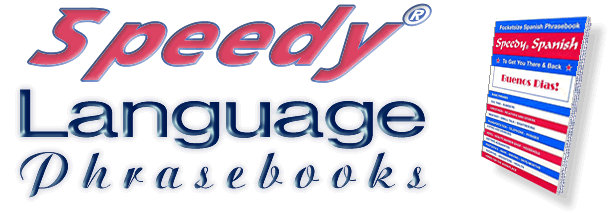
Speedy Language Phrasebooks
Handy phrasebooks in several languages.
I have used these handy little guides overseas in several countries for years.
You will find them very handy on your travels overseas. Your Webmaster
-
Online Free Spell Checker
Email, or e-mail as it is often spelt, is a massive part of everyday life, and whether business or personal emails, the words contained within an email represent the sender.
-
A Great Interactive Map of World Countries"
A closeup view of all portions of any nation
This source will let you explore the entire world.
-
Russian-Bar Acrobatic
A performance on the Russian Bar, recorded for Chinese television at the Circus Festival of Monte Carlo. The final stunt is unbelievable! PS Enlarge your screen too. Do not miss this performance.

-
IE Language Links...dozens of them in many languages/not to be missed.
 
-
A super new site with children's songs from all over the world
Do check this one out! It is a great new link and jump along with them. jeb

Text to speech translator
A powerful and fun site with sound and a variety of voices/TRY IT!
A Language Tutorial Index
Free Language Tutorials, Basic Phrases, Vocabulary and Grammar in 15 Languages
Be sure to check this one out as it is totally LOADED!


-
Fluent Future/multiple language videos
Fluentfuture is a community-based language exchange platform. You can learn languages for free
-
Languages of the World / BBC
Essential phrases in 36 languages. Learn all the basics here/RICH SITE!
-
Digital Dialects
The Digital Dialects website features free to use interactive games for learning languages. This site requires the use of Macromedia Flash Player. Great new addition here with 59 different languages/Rich Site w/lots of great activities for each.

-
Around the world in six languages
A Word A Day and A Phrase A Day right here
Examples, | Arabic | Esperanto | Greek | Irish | Welsh | Russian | French | Russian | Italian | and more...
From the BBC/Multiple Language Site with MP3 downloads
Very rich/Try it!
 
FL Teach Websites
This is a totally loaded website with many helpful links to various languages
900 Sites for Teachers
World Countries
Choose a country and receive information. Great site!
Foreign Language Education Sites

Answers.com
Answers.com offers free access to millions of topics from the world's leading publishers.
Free Language
Lessons, Podcasts, Courses, Audio, Video, Study Guides, Learning Materials.
"We learn very little from our successes,
but an awful lot from our failures"

WWW Resources for Language Teachers from SUNY Cortland
Many Fun Language Games
More Games tagged 'languages'

Lingua Central from the UK
Games, Vocabulary and much more in French, Spanish and German
Best Chinese Websites Homepage


A lot of reading is getting done at home
|
| .
|
|
|
 for learning another language


 The most recently added NEW SITES



 Learning Games and Fun Activities for the FL Classroom






 Learning another language?






 Spanish
 French
 Chinese
 Italian
 Russian
 Hindi
Hindi German
 Japanese
 Arabic
 TESOL/ESL
 Portuguese
 Bengali
 Hebrew
 Turkish
 Czech
Czech Korean
 Pashto
 Malay
Malay Punjabi
 Tamil
Tamil Swahili
 Polish
 Urdu
Urdu Javanese
 Thai
Thai Greek
Greek Telugu
 Marathi
 Persian
 Vietnamese











 Google Translations Services





















 Language teacher advice and tips: