




 for learning Arabic
 Best Arabic Websites



 The most recently added NEW SITES are found here
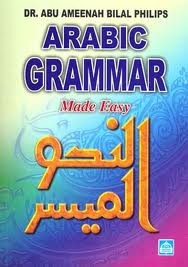 Arabic Grammar Help
 Test Your Arabic Here
 Help With Arabic Verbs
 Sites for Arabic Teachers
 Arabic Tutorial Lessons
 Arabic Worksheets
 Arabic Vocabulary Builders
 Arabic Games and Fun Sites
 Arabic Dictionaries
 Sites for Arabic Beginners
 Newspapers in Arabic
 Arabic for Children
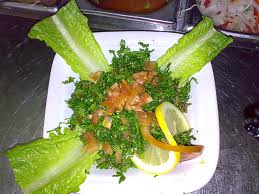
 Arabic Food and Cuisine
 Search Engines for Arabic
 Helpful Miscellaneous Sites
 Arabic Pen Pals
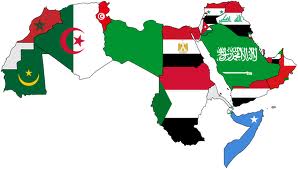
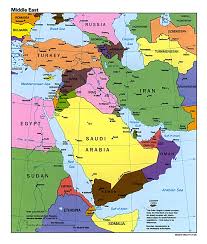 The Middle East
 A Webmaster Choice Site
 Arabic Teacher Hints, Advice and Teaching Tips










|
  Translator Sites: English -> Arabic / Arabic -> English Translator Sites: English -> Arabic / Arabic -> English
|





Want to know the exact population of Saudi Arabia today?
 Jim's Multilanguage Homepage for 32 languagesJim's Multilanguage Homepage in Arabic ... enjoy!
 I love to speak Arabic

 Here is where you find out.
And it is minute by minute. Watch the stats change.




 Greetings Pronouns Questions Directions Basics and Counting The school is situated at the Gatesville mosque in Cape Town South Africa. The focus is to teach Arabic and espescially the understanding of the Noble Quran.

 Fun games and activities to help you or your child learn the Arabic language.
Syraj is an online Children's Arabic language bookstore focused on Arabic literacy and bilingual education.  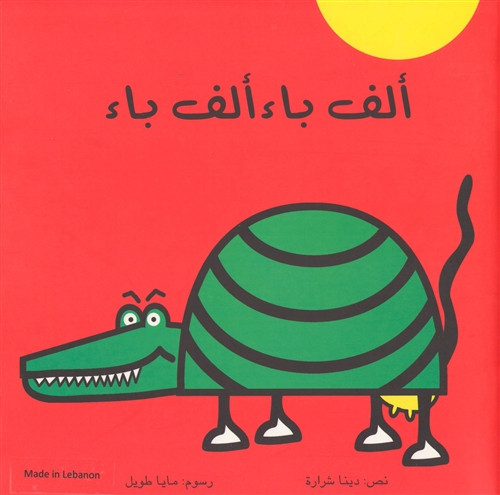   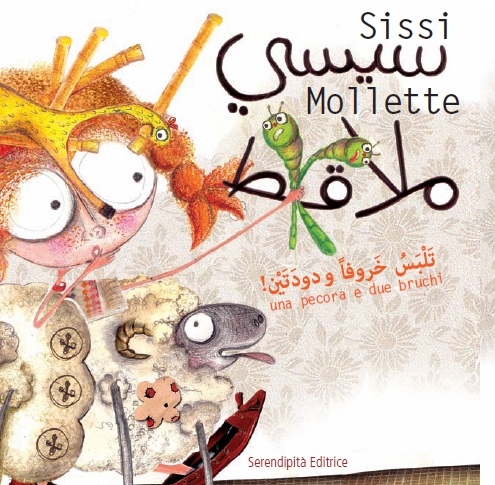 A wide variety of books for children in Arabic. This is the traditional ABCDEFG alphabet song in Arabic. FUN WITH ARABIC is as an online program that teaches the basics of the Arabic language. With no lengthy introductions or linguistic complications, this program will walk you through the Arabic alphabet in a fun and easy way. Many Arabic phrases complete with sound/a new discovery  Start Learning Modern Standard Arabic Today   FUN WITH ARABIC is as an online program that teaches the basics of the Arabic language. With no lengthy introductions or linguistic complications, this program will walk you through the Arabic alphabet in a fun and easy way.
If you're trying to learn Arabic Verbs you will find some useful resources including a course about Verbs in the present past and future tense... to help you with your Arabic grammar.
 Provides resources on Arabic language related websites around the world. A propos de SpeakMoroccan I established this web site to help my students learning the Arabic language as a second language and to post our community cultural activities online / Kahled Start to learn Arabic free immediately (no registration required!)
Fluentfuture is a community-based language exchange platform. You can learn languages for free From OMNIGLOT / A rich site!   Learn the Arabic Writing System here Learn the Arabic Writing System hereHere you will find a selection of videos teaching you how to write the letters of the Arabic alphabet. Multiple helpful sites here... Its free and it runs on your browser
Learning the Arabic Vocabulary is very important because its structure is used in every day conversation. The more you master it the more you get closer to mastering the Arabic language.
 Saudi Net Links Saudi Net LinksTrade and business information and links to Saudi Arabia, Arabian Gulf and Middle East area
Fact Files on many subjects
Grab a book or find a comfortable chair and enjoy an hour of some great music.  
Anger begins with madness, but ends in regret. An old Arabic Proverb   Arabic Sounds. Now practice each of them

|
|












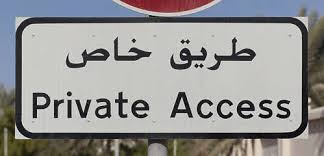





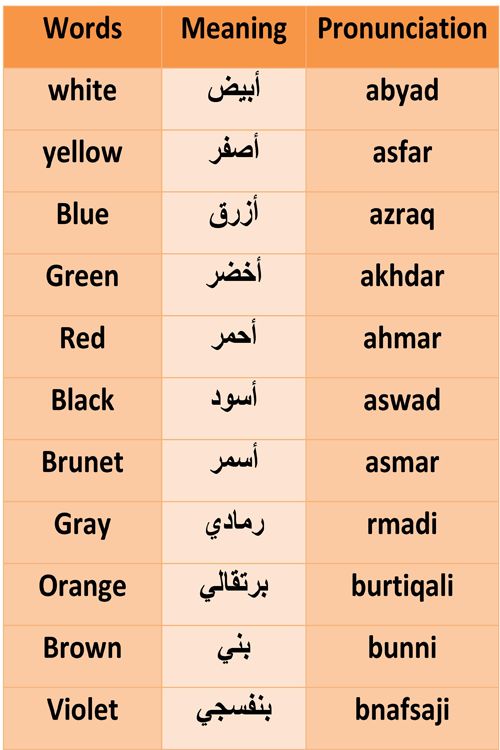
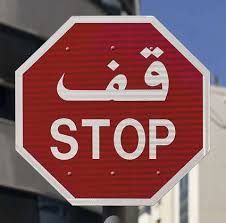




 ==>Jim's 31 Different Languages Homepage



































twofour54 - the arabic media content creation community in abu dhabi

Learn the alphabet with lots of color/well done too.

 Tips for Learning Another Language
From ie language / a great site
500 Pals waiting for a response.
A language exchange with a Arabic,
Egyptian language pen pal is an excellent way to make
a Arabic, Egyptian-speaking friend, learn about the culture and
improve your Arabic, Egyptian language skills.

All the news from arab-speaking countries
| |

|
|

 Read all about the Lost Empire above right here

|



|

 Mama Lisa's World

|

|

|




|


I know from my own experience that being on a continual path of self-improvement is an absolute necessity toward be a good teacher. Hang out with other educators that you admire. Watch them closely and learn from them. Imitation is the greatest compliment! Join your Arabic language association (AATA - http://www.aataweb.org) plus two foreign language teacher associations (state and national: ACTFL- (http://www.actfl.org) and attend their annual meetings on a regular basis. Get involved anyway you can with each. Rub noses with people at the TOP. Get to know the officers personally. Keep in contact with them. Use these association offerings, suggestions and resources.
American Association of Teachers of Arabic (AATA) aims to facilitate communication and cooperation between teachers of Arabic and to promote study, criticism, research and instruction in the field of Arabic language pedagogy, Arabic linguistics and Arabic literature. The information available here is a sampling of the materials available to AATA members. For information on joining, please click here, or follow the navigation links to the left.
Whenever you can in your own environment, ask to observe colleagues in action in their classroom. Pick up ideas that work for them and adopt and adapt them to you own classroom. Always be on the "lookout" for new ideas, new means of teaching, new ways to incorporate things that work for others into your own methodology. Don't hesitate to ask questions of teachers who have had much success as to how and why that happened. I used to observe elementary teachers and how they interacted with their young students. Always something to learn. "Learn from the mistakes of others. You'll never live long enough to make all of them yourself." Another that I always loved is "If you think you're green, you'll grow - if you think you're ripe, you'll rot." All true. Don't rot! That's an axiom that will never grow old. You may think that you are the best, but you're not. There is always someone better than you. (I learned this playing basketball) Learn from them. Know what the best practices are and be aware of the current online resources that can be of great help to you and your Arabic language students.
Keep your classroom presentations FRESH. Keep up with innovation and the changing needs of your students by incorporating technology such as computer use, iPhones, iPads, e-mail and a host of other innovations into your routine classroom activities to communicate with others in the target language and to access authentic resources. Stay current with options and trends in the field such as the National Standards and know how to incorporate them into your daily plans. Hopefully these few ideas will aid in your growth and success. Stay with it. Don't throw in the towel like many have, but again as I point out above, whatever new ideas you discover, you must first adopt and then adapt. Not everything you see elsewhere will work for you as I have personally learned. You must adapt those ideas to your own classroom. There are a host of great ideas available on all these sites, but they are only as successful as you will make them. And perhaps most important of all, do ask your students often how they feel about what they are doing and learning and what they enjoy the most and the least in your classroom. Most of all, do enjoy your students and share yourself with them. [
Those who attempt to learn Arabic are probably familiar with the specific challenges associated with learning this language. One of the greatest challenges that students of Arabic are faced with has to do with the script. The Arabic language has an alphabet that contains 28 letters. Most students find that it does not take long to learn the Arabic alphabet. However, each letter has four different forms. The form that is used depends on whether the letter comes at the beginning, middle, or end of a word. Learning the different letter variations can be a challenge for students. Another characteristic of Arabic that may confound students at first has to do with how books are written and read. In Arabic, books are read from the right to the left. When a book is opened, it is opened from the left.
One of the greatest challenges that most students face as the learn Arabic is the fact that most vowels are not used when writing. In beginning textbooks, the missing vowels are indicated by little marks that are placed above and below the words. However, more advanced texts and most reading materials do not contain these helping marks. Yet another challenge involves the special "noises" that one must learn in the study of Arabic. Learning Arabic involves learning many new sounds that are not used by most Westerners. Perhaps the most infamous of these is the sound that is described as emitting air from the back of your throat, as if trying to put out a candle by blowing air from the throat. This sound can be difficult for new students to learn and to use fluidly during conversation.
Arabic is the language of a large part of our planet. It is the main language in 22 countries, spoken by more than 250 million people. It is also the second language in many Islamic countries because it is considered the spiritual language of Islam -one of the world's major religions- (we're talking here about more than 1 billion people). It is one of the permanent languages in the United Nations.
Another reason is that Arabic is one of the oldest living languages in the world, and it is the origin of many languages, in fact there is a theory that says "Arabic is the origin of languages" and those who adopt this theory depend on the fact that Arabs are able to pronounce any sound in any language in the world very easily, on the other hand lots of non-Arabs have a very hard time pronouncing some Arabic letters which are not available in their native language.
Source:
Why should you learn Arabic?
Another reason is that Arabic is one of the oldest living languages in the world, and it is the origin of many languages. It has heavily influenced languages such as Spanish, Portuguese, Persian, Hindustani, Turkish, Malay, Urdu, Indonesian, Kurdish, Pashto, Swahili, Berber, Bengali and many others. Arguably it is said that Arabic is one key origin of modern day languages. An indication of this is the fact that most Arabic native speakers are easily able to pronounce almost any sound in any language in the world, on the other hand many non-Arabic natives have a hard time pronouncing some Arabic letters and sounds which are not available in their native languages (for example the letter Dhad in Arabic is not used in any other language in the world, and the Arabic language is sometimes called the language of the Dhad).
For thousands of years minor changes were made to the Arabic language and it was appropriate for every era throughout the countless civilizations that used it as their native language. In fact, Arabic has a great influence in most of the languages in our present times. Maybe, the most obvious contribution of Arabic is developing and passing on the "Arabic numerals" (0,1,2,3..) to humanity, not to mention the numerous words with Arabic origins which are used today in most languages (Algorithm, Algebra, Alcohol, Coffee, Zero, Sugar and the list goes on.) Arabic was the international language of science, mathematics, culture, and philosophy during the Middle Ages. Its contribution to the Western civilization as an infrastructure for development of science and medicine is enormous.
Why did it stay alive through thousands of years when other languages didn't?
|