 Mercury Symbol |
 |
|
Mercury Symbol |
|
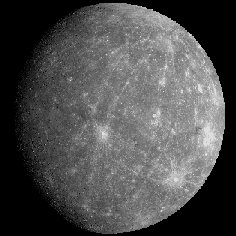
According to mythology, Mercury was the messenger of the Gods. This had to do in part with its rapid motion around the Sun. It is the closest planet to the Sun, therefore it has the shortest orbital period. Also due to its proximity to the Sun, it is very difficult to see in the morning or evening twilight. It rarely gets more than 25 degrees away from the Sun.
Mercury is so close to the Sun that astronomers thought that there would probably be orbital coupling, like the Earth-Moon system (a tidally locked system). They expected the rotation period to be the same as the orbital period, so that one side of Mercury would always face the Sun, just like one side of the Moon always faces the Earth. Does the orbital period equal the rotation period for Mercury? It is a small planet and difficult to observe, so astronomers were not sure of its rotation period. They had to wait for the invention of radar to check it out. By bouncing a radar signal off the planet, they could measure the speed of its rotation and therefore determine the period of rotation (sort of the same way a highway patrol officer can get you clocked on the radar for being slightly over the speed limit on the highway). Are the orbital period and rotation period the same? No. The period for one orbit is about 88 days, while the period for one rotation is 59 days (pretty slow spinner, eh?). At first glance this doesn't seem to be very significant, but if you were to take the ratio of the periods, 59/88, you get a number close to 2/3. What's so great about that?
The basic upshot is that there is a kind of coupling between the orbit and rotation, but not the one that was expected. For every two orbits around the Sun, Mercury rotates three times on its axis. Figure 1 shows how the orientation of an astronaut would change over time as Mercury went about the Sun. By the time the planet had made one orbit, Mercury would have made 1.5 (or 3/2) rotations; one more orbit, and there would be a total of three rotations - sort of unusual.
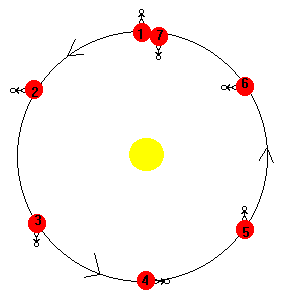 Figure 1. An astronaut's view on Mercury would
change slowly. An astronaut is located on the side of the planet away
from the Sun to begin with (position 1). As the planet moves around the
Sun and rotates on its axis (both counterclockwise, as seen here), then
by the time the planet has moved 1/3 of the way in its orbit, it would
have rotated around 1/2 way (position 3). One complete rotation is
reached by position 5, where the astronaut is again upright, and the
planet has gone 2/3 of its way in its orbit. By the time one orbit is
completed (position 7), the planet has completed 3/2 or 1.5 rotations.
Notice how the numbers "two" and "three" keep popping up here.
Figure 1. An astronaut's view on Mercury would
change slowly. An astronaut is located on the side of the planet away
from the Sun to begin with (position 1). As the planet moves around the
Sun and rotates on its axis (both counterclockwise, as seen here), then
by the time the planet has moved 1/3 of the way in its orbit, it would
have rotated around 1/2 way (position 3). One complete rotation is
reached by position 5, where the astronaut is again upright, and the
planet has gone 2/3 of its way in its orbit. By the time one orbit is
completed (position 7), the planet has completed 3/2 or 1.5 rotations.
Notice how the numbers "two" and "three" keep popping up here.
The Sun's mass influences the space Mercury occupies and adds some extra distortion to Mercury's orbit in a manner known as orbital precession. Observations of its orbit over many years showed that the locations of perihelion shifts (or you could say its orbit wobbles). Early astronomers didn't know what caused it, and even Newton's law of gravity wasn't able to adequately explain it. The distortion of space around the Sun, as described by Einstein's theory of General Relativity, helps to explain the cause of the orbital precession of Mercury, so that is one mystery that was solved by a better theory (not to say that Newton's law of gravity is lousy, but sometimes it needs help).
We don't know a lot about Mercury, in part because we haven't really spent a lot of time exploring it. Also since it is so close to the Sun and relatively small, it is very difficult to view from the Earth, even with the largest telescopes. The earliest close exploration was by the Mariner 10 spacecraft which flew by in 1974-75 and was able to photograph only 1/2 of the surface. For nearly 34 that was the best information available. In 2008, a spacecraft named MESSENGER flew past the planet for the first time. After that it flew by 2 more times before changing its orbit enough to enter into a long-term orbit about the planet. From 2011 to 2015, MESSENGER was a "satellite" of Mercury and has been able to provide us with a significant amount of new information about the planet. Before 2008, we only had images of 1/2 the surface and now we have pretty much the entire surface imaged. Messenger has provided a great deal of information about the mineral characteristics of the surface as well as information about the magnetic field and likely evolutionary history of this small world. The mission ended on April 30, 2015 when the spacecraft crashed into the surface at 8,750 mph (this was an intentional impact). It probably left a good sized crater due to this, but because we don't currently have any spacecraft around Mercury, we can't see that new crater yet. There are various videos of the things Messenger observed at Mercury available on YouTube, so you can check those out for more information.
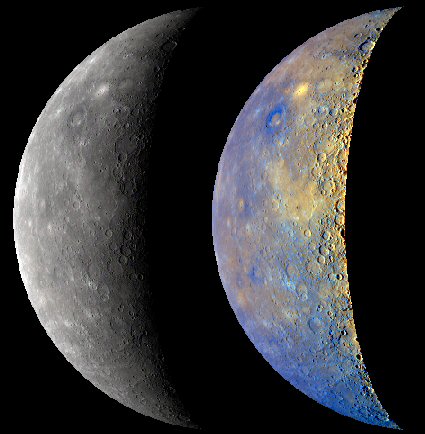 Figure 2. Two views of Mercury from the MESSENGER spacecraft.
To the left is a true color image showing how Mercury would look to the eye.
The image on the right is a false color image based upon filtered images that will
be used to analyze the geological features and material composition. Image from
NASA/Johns Hopkins University Applied Physics Laboratory/Carnegie Institution of Washington.
Figure 2. Two views of Mercury from the MESSENGER spacecraft.
To the left is a true color image showing how Mercury would look to the eye.
The image on the right is a false color image based upon filtered images that will
be used to analyze the geological features and material composition. Image from
NASA/Johns Hopkins University Applied Physics Laboratory/Carnegie Institution of Washington.
What does Mercury look like? There are craters scatter about the place, just like some aresa of the Moon, but not as densely concentrated as the Moon's far side. There is some evidence of large volcanic plains - not exactly like the mare on the Moon, but relatively smooth in places. However, these plains are older than the mare, so they have more craters on them (remember, it took a while for the mare on the Moon to form, and there is less cratering there). Basically, the plains on Mercury are sort of in between the ages of the heavily cratered highlands of the Moon and the smooth lunar mare. Also like the Moon, there is no atmosphere. This will, of course, cause there to be wide variations in temperature since heat is not retained at night. The daytime temperature is much greater than on the Moon due to Mercury's close proximity to the Sun. During the daytime on Mercury the temperature reaches 700 K (800 degrees F), while the nighttime temperature is similar to that found on the Moon, about 100 K (-280 degrees F).
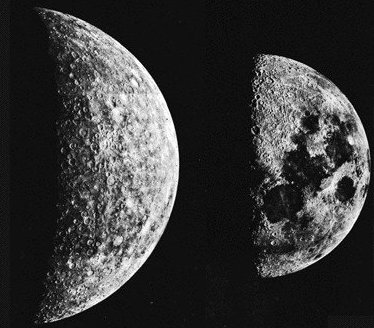 Figure 3.
A side-by-side comparison of Mercury and the Moon (left and right
respectively). Note the lack of mare on Mercury, though the cratering
isn't as densely concentrated as on the Moon's highland regions. Images
from NASA.
Figure 3.
A side-by-side comparison of Mercury and the Moon (left and right
respectively). Note the lack of mare on Mercury, though the cratering
isn't as densely concentrated as on the Moon's highland regions. Images
from NASA.
There are some features seen on the surface of Mercury that are also observed on the Moon. Amongst these are the scarps. These are long cliffs that stretch along the surface for hundreds of km and can be up to 3 km high, which is significantly larger than those seen on the Moon. And while the Moon has the large impact basins that are now the mare, Mercury has older features that are not as smooth. The most prominent is the Caloris Basin, a multi-ringed feature that is about 1550 km in diameter. Just by chance the Caloris Basin was located on the boundary of the lit and unlit sides of Mercury when the Mariner 10 spacecraft photographed it in the 1970, so only about 1/2 of it was visible. The MESSENGER mission has been able to photograph the rest of the basin - and actually we found out that it was a larger feature than we initially thought. This means that if you took my astronomy course before 2008, you learned the wrong size for the Caloris Basin - I told you astronomy was annoying! Just follow this link to see the full image of the Caloris basin, and the previous assumed size (in yellow).
There are some puzzling features on Mercury that are a bit unexpected. First are the relatively large lava flow features visible near the planet's north pole. While this only covers a fraction of the surface, it is quite thick. Also there are a variety of features called "hollows" which appear to related to volcanic activity on the surface. Hollows appear as pitted features on the surface and they tend to be bluer than the other terrain, which makes them rather distinct. It is also possible that these hollows may be currently changing, indicating that Mercury may still be geologically active.
If you were to look at the side of the planet opposite of the Caloris Basin, you would see a region known as the Jumbled or Weird Terrain. This is a very hilly area covering about 500,000 square km. Is it a coincidence that these objects are on opposites of the planet? - probably not. The likely scenario is that the impact which produced the Caloris Basin produced a big shock wave, which spread out from the impact site. The shock wave would eventually run into itself on the other side of the planet, and when this happens the material in the area would suffer the consequences. This is sort of like the effect you get when two water waves come together and spray upward.
 |
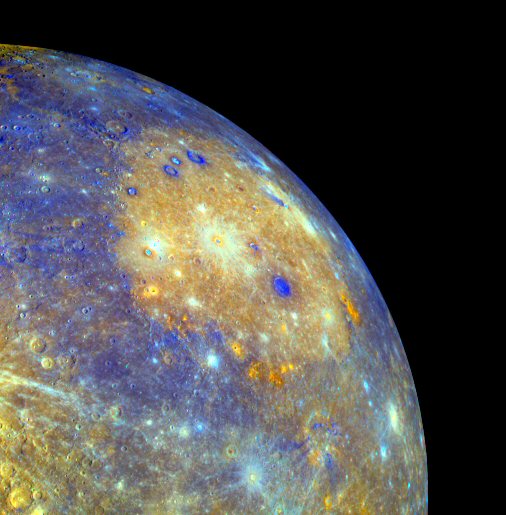 |
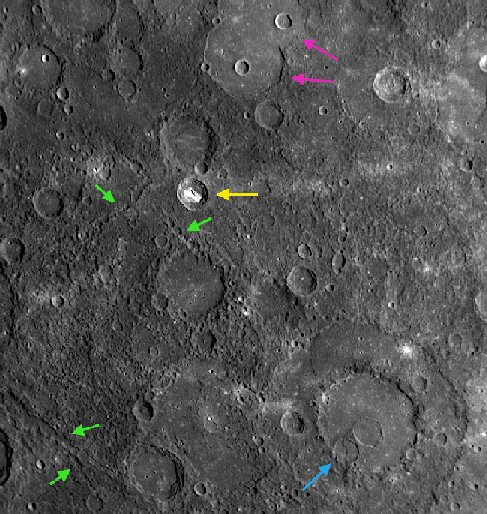
| Figure 4. In the image on the left, various surface features are shown. The pink arrows show large, older craters that have experienced lava floods (smoothed out). A scarp is visible running through a crater on the bottom (blue arrow). The yellow arrow shows some of the unusual bright material that has been observed in craters on Mercury, but have yet to be explaiend. Green arrows show chains of secondary craters, which were produced by other impacts which throw up a large amount of material. To the right is a false color image of the Caloris Basin showing the composition variation of the basin relative to the surrounding area. The basin's area is shown as the yellow-ish terrain. Image from NASA/Johns Hopkins University Applied Physics Laboratory/Arizona State University/Carnegie Institution of Washington. | |
Recent findings from the MESSENGER mission indicate that it is possible for there to be water (in the form of ice) in some of the polar craters. These areas show relatively bright reflections from the IR instruments on the spacecraft was well as other indicators that water ice my exist on the surface in these dark craters. If that is the case, that would be another feature that Mercury shares with the Moon.
Mercury also has a very weak magnetic field, which was first detected by the Mariner 10 spacecraft and has been accurately measured by MESSENGER. It's about 1% of the Earth's in terms of its strength. That's not very good since Mercury is so close to the Sun, and the strong solar winds are able to flatten the field down significantly on the sun-facing side of the planet. Large eruptions of particles from the Sun would have a much easier time getting to the the surface of Mercury than the Earth.
By looking at Mercury's density and mass, we can determine the likely composition of its interior. Mercury appears to have a very large iron-nickel core, making up a larger fraction of its interior than the Earth's core. Why is the magnetic field so weak? In part, because the planet is not a fast spinner (remember, one rotation takes 59 of our days), and it is likely that this core is pretty rigid (not liquid like part of the Earth's core). Mercury is such a small planet that it would have cooled off very quickly in its history, while the Earth is still pretty hot. All of these effects make Mercury's magnetic field pretty weak.
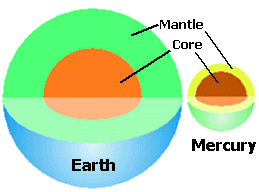 Figure 5.
Mercury's interior is compared to the Earth's. While the Earth is a
larger planet, the fraction of the interior taken up be the iron rich
core is much less than the fraction of Mercury's interior. In fact,
Mercury's core extends about 75% of the radius from the center - the
Earth's iron core extends about 55% from the center.
Figure 5.
Mercury's interior is compared to the Earth's. While the Earth is a
larger planet, the fraction of the interior taken up be the iron rich
core is much less than the fraction of Mercury's interior. In fact,
Mercury's core extends about 75% of the radius from the center - the
Earth's iron core extends about 55% from the center.
There is a actually a problem with Mercury having such a large iron core. There is just too much iron - objects in the solar system don't have such a large amount of iron in them, and it seems unlikely that the planet should have formed with that much iron in the first place. Currently astronomrs theorize that Mercury in the past was a much larger object with a larger layer of rocky material. A large scale impact or several impacts would have resulted in the loss of a large fraction of the lower density surface material leaving behind a planet dominated by a large iron core. This is a reasonable theory since you have the Sun nearby and it tends to pull in a large number of objects, unfortunately for Mercury which may have gotten in the way of one of those objects. Other theories think that the Sun's high temperature may have also stripped away some of the surface.
The large iron core can also explain the presence of the scarps. Early in the planet's history, the rock layer above the iron core (the mantle and crust) would have cooled and solidified before the iron core would have cooled. Long after the crust solidified, the iron core started to cool down. What happens when iron cools? In case you don't know, it contracts - gets smaller. There is so much iron in the interior of the planet that the contractions were pretty major possibly 5-10 km of contraction in some areas. With the shrinking of the core the rock layers above it sort of lost their support, so they collapsed in various places forming long cliffs or, as we call them, scarps. Recent observations from the Messenger spacecraft seem to support this theory, since detailed observations along with elevation data point to significant elevation differences across the surface. Overall the average contraction may be around 7 km (4.4 miles). That might not seem to be a large amount, but it could certainly effect the surface features.
With the Messenger spacecraft still in orbit about Mercury I will likely have to update the material in this section of the course again in the future.
 Venus Symbol |
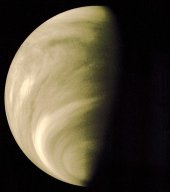 |
In mythology, Venus is the Goddess of Love. That's about the only thing that's nice about this lady. In terms of overall planetary features, Venus comes closest to being like the Earth and is often called the Earth's twin. Venus and Earth have nearly identical compositions, sizes, masses and densities, but that's about all that's the same. The Earth is slightly more massive and has a slightly larger radius, but not by much. If you were to view Venus through a telescope you would see a uniformly colored object because it is completely covered by clouds. The image shown above is actually taken in ultraviolet light so that cloud structures are seen, though the surface is still not visible. For the most part, a regular telescope view of Venus is pretty dull, since the cloud layers are very uniform (smooth) and you can't see any part of the surface. It wasn't until radar was invented that we could even determine the rotation period of the planet.
Using radar, we discovered that Venus rotates on its axis once every 243 days. It is a very slow spinner (spinner, not spinster). Actually, it takes longer to spin around once on its axis than it takes to go around the Sun! A day on Venus is longer than a Venusian year. That'll really confuse you. Not only is it slow, but it is also spinning backwards (or retrograde)! If you were on Venus (which would not be a good situation, as you'll see), you would see the Sun rise in the west, not the east.
The clouds completely cover the planet, so it would be a good idea to take a look at the atmosphere and see how it compares to the Earth's. Here is the composition of Venus's atmosphere -
Now here's an interesting thing. If Venus and the Earth are so physically similar (in mass, radius, and density), why are their atmospheres so different? Again, as in the case of the Earth, Venus's current atmosphere is a secondary atmosphere. It is not the atmosphere that the planet had when it was formed. Just like on the Earth, the current atmosphere would have gradually built up over time due to volcanic out gassing. Now remember, volcanoes release such things as H2O, CO2 and N2 (along with stuff like sulfur). CO2 is the main component of Venus's atmosphere. Why isn't water? Unlike on the Earth, the surface of Venus was too hot for liquid oceans to remain for long and help remove the CO2 from the atmosphere. If you don't have liquid water for a significant amount of time, you can't get rid of the CO2 and it just stays in the atmosphere. It is likely that the water from the volcanoes would have evaporated and was then broken up by the high temperatures with the hydrogen escaping into space and the oxygen either escaping into space or staying on the planet and probably oxidizing the surface rocks (rusting it). Without that water in liquid form, you're stuck with the nice and toxic CO2 rich atmosphere. Based upon recent observations of the atmosphere, it is possible that there was even more water in the atmosphere of Venus in the past than was on the Earth. But it was just too hot.
No matter where it came from, it's still a rather nasty atmosphere, since it is poisonous to us - but wait, it gets better. Not only are the clouds annoying since they prevent us from seeing the surface, but some of the cloud layers also contain sulfuric acid (H2SO4), making Venus not a very nice place to live. If the atmosphere doesn't poison you, it will erode or melt you gradually. But, as you'll see, it gets even better!
The high CO2 content has another rather interesting effect on the characteristics of the atmosphere apart from its poisonous nature. CO2 is particularly good at trapping in the heat in the atmosphere. This is that fun thing known as the Greenhouse effect. While the cloud cover prevents most light from getting in, once it does, it can't get out again. The thick atmosphere effectively traps the heat in, and current information from infrared telescopes and probes on the surface indicate that the surface temperature there is around 750 K (900 degrees F). There isn't much temperature variation on the day and night sides of the planet due to the way that the atmosphere traps heat so effectively. Venus, not Mercury, has the hottest average planet surface temperature in the solar system.The atmosphere can poison you, erode you, and burn you up - what else can it do? The other amazing aspect of Venus's atmosphere is that it is also very oppressive (dense). The air pressure on Venus is about 100 times greater than that of the Earth's surface air pressure. If you wanted to feel this much pressure on the Earth, you'd have to dive down 3000 feet into the ocean. Of course, you'd be easily crushed. This really thick atmosphere results in very low wind speeds, since such a thick atmosphere can't move easily, though it would easily carry material in it. If the poison, acid, and heat don't kill you, you'll get crushed by the weight of the atmosphere. Venus is not high on anybody's vacation list.
The cloud coverage of the planet is so complete that it prevents us from looking directly at the surface. In spite of this we have been able to explore it to some degree, or at least we have sent some unlucky probes there. Most of the probes that have visited Venus were sent by the former Soviet Union. These included Venera 9 and 10 (1975), 13 and 14 (1982), and 15 and 16 (1984).
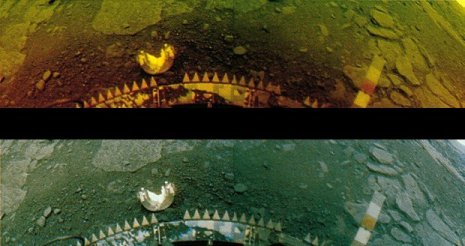 Figure 6. The surface of Venus as seen by the Venera
13 spacecraft. The picture may look a bit distorted, but that's
intentional. The top picture shows the actual color of the surface. This
orangish tint is due to the cloud cover. The bottom picture has been
altered to remove the coloring by the clouds, so this is how Venus
would look under normal lighting. Due to the severe conditions on the
surface of the planet, a spacecraft may have only one chance to take a
picture before it is destroyed, so the lens is shaped in such a way to
get as much information as possible. That is why there is such a
distorted view, since it not only shows the ground directly below the
spacecraft but also how things look in the distance.
Figure 6. The surface of Venus as seen by the Venera
13 spacecraft. The picture may look a bit distorted, but that's
intentional. The top picture shows the actual color of the surface. This
orangish tint is due to the cloud cover. The bottom picture has been
altered to remove the coloring by the clouds, so this is how Venus
would look under normal lighting. Due to the severe conditions on the
surface of the planet, a spacecraft may have only one chance to take a
picture before it is destroyed, so the lens is shaped in such a way to
get as much information as possible. That is why there is such a
distorted view, since it not only shows the ground directly below the
spacecraft but also how things look in the distance.
These probes not only landed on the surface but also did some radar mapping of the surface as they orbited around Venus. As they descended through the atmosphere, they took samples of it and provided information on its composition, temperature, pressure, etc. Once they reached the surface they obtained as much information as they could before the nasty conditions destroyed them. All images from the surface of Venus are from these Soviet probes and they show a surface that looks very dark - rather similar to the lunar mare. Some of the rocks look rather volcanic (basaltic) in origin.
The U.S. did not send as many probes to Venus but has done extensive work on investigating this nasty planet as well. The Pioneer 1 & 2 spacecrafts (1978) did a variety of things, including radar mapping of the surface and ultraviolet imaging of the clouds (to see weather patterns). The Pioneer 2 also dropped a few probes into the atmosphere. The most data-rich study of Venus was performed by the Magellan Orbiter. This spacecraft was in orbit around Venus for several years (1990-1994) using a very high resolution radar system to map out the surface features of Venus better than had been done previously. You can't see the surface directly, so radar is the only way to look through the clouds to "see" the surface. You have to be careful, since a radar image isn't the same as a photographic image. The radar shows mainly the texture of the surface. Areas that are smooth appear to be very dark on a radar image, while areas that are very rough appear very bright. By combining this information with elevation data, the Magellan spacecraft was able to provide us with a high resolution global view of the planet.
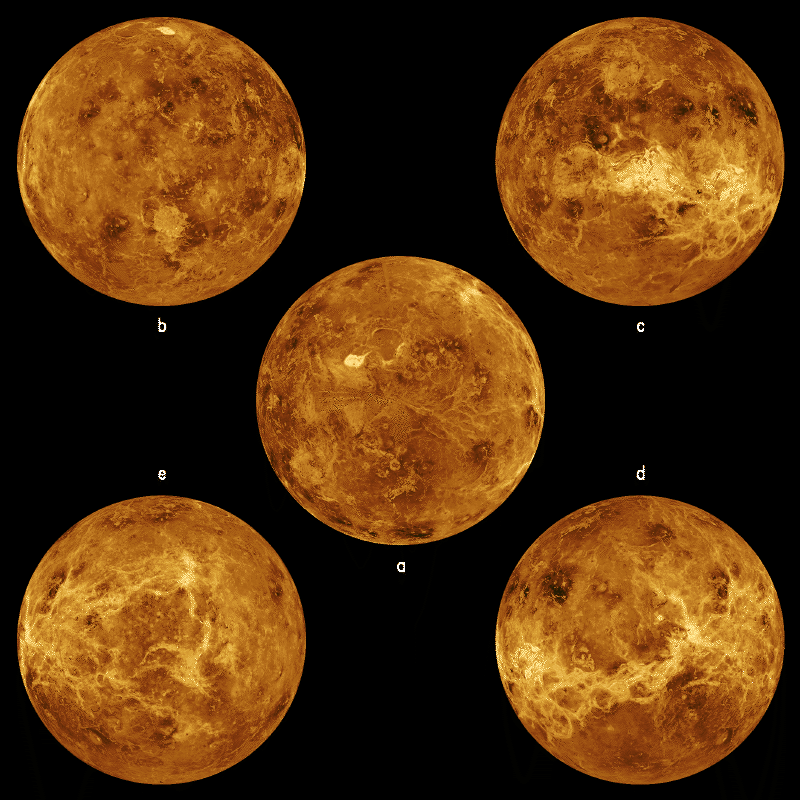 Figure
7. (Click on the image to get
a larger version showing more sides of the planet.) An image of the
surface of Venus as seen by the Magellan spacecraft. Remember, the
light-dark areas are not the colors of those regions but indications of
the roughness of the surface, with the smooth areas being dark and the
rough areas being very bright. If you would like to see a movie showing
how the globe of Venus looks as it rotates, just click here. Images from NASA, animation from Calvin
J. Hamilton.
Figure
7. (Click on the image to get
a larger version showing more sides of the planet.) An image of the
surface of Venus as seen by the Magellan spacecraft. Remember, the
light-dark areas are not the colors of those regions but indications of
the roughness of the surface, with the smooth areas being dark and the
rough areas being very bright. If you would like to see a movie showing
how the globe of Venus looks as it rotates, just click here. Images from NASA, animation from Calvin
J. Hamilton.
Recently the Venus Express space craft completed its mission around Venus, mainly studying the atmosphere and cloud layers in great detail. This mission was launched by the European Space Agency (ESA), and it was pretty quick - only 3 years between the time the mission was approved until the launch date. The spacecraft arrived at Venus in April 2006 and during the summer of 2014 it was sent plunging into the atmosphere to be destroyed, something that is commonly done to remove potentially hazardous space debris (they crashed it while there was just barely enough fuel still available). In general Venus appears to have a rather boring cloud layer, since it usually appears to the eye to be uniformly colored. However it is possible for the Venus Express to image different layers of the atmosphere using infrared and ultraviolet cameras. This has allowed astronomers to understand the temperature structure and wind circulation patterns in the atmopshere. The atmosphere structure of Venus has variations like the Earth, with the temperature being very high at the surface, cooling with elevation, and then getting hotter again as you get further up. By the time you get 100 km above the surface, the temperature is down to 170 k (-148 F). Since Venus rotates much more slowly than the Earth, the air flow patterns are not as complex, however it is still possible to have some good sized storms present. One such "storm" was first observed over the planet's south pole years ago, and it is not clear how it formed or why it exists.
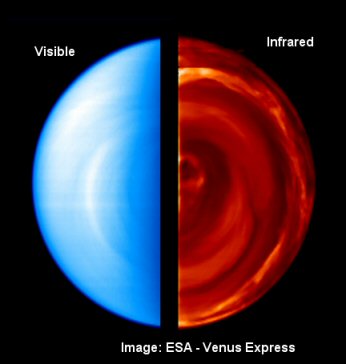 Figure 8. Image
from the Venus Express spacecraft showing the cloud layers of Venus. The left
side is the "day" view taken with a visible light camera, while the right side
shows the "night" side of the planet taken with an infrared camera.
Figure 8. Image
from the Venus Express spacecraft showing the cloud layers of Venus. The left
side is the "day" view taken with a visible light camera, while the right side
shows the "night" side of the planet taken with an infrared camera.
What is the surface like? There are quite a few similarities between the features seen on the surface of Venus and those seen on the surface of the Earth, though the way that these features are arranged and how common they are tells us something about the nature of Venus's surface history.
First of all, there are the Lowlands, which cover about 27% of the surface. They often appear as large circular areas and are often designated as Plains (Planitia) on maps or globes. They are pretty smooth and flat, so these are the mainly dark features that you see on the Magellan images of Venus. They also tend to be located in regions of low elevation, which tells us something about their formation. It is possible that they could have been formed by large impacts (circular impact basins), the relaxation (slumping) of the surface, or due to lava flows that filled in circular basins. They do look suspiciously similar to the mare of the Moon.
The most common type of surface features on Venus are the Rolling Plains, which cover about 65% of the surface. These are not entirely smooth like the lowlands but instead are rather hilly. When you look in these regions, you find such features as impact craters, volcanic mountains and volcanic openings (calderas or craters). In fact, there are many volcanic features seen on Venus. The volcanoes tend to have very low slopes (they aren't steep) and their structures are similar to the basaltic volcanoes on the Earth, like those seen in Hawaii. This would be in line with the images of the surface rocks that the Venera spacecraft obtained, which showed dark rocks that look very basaltic - quite a bit of volcanic activity on Venus, eh?
The last major surface features are the Continents. There are many small features that may be viewed as small continents (raised land masses), but there are only two really big ones.
Aphrodite Terra is about the size of Africa and is found along the equator. It is a generally raised up region, about 5.6 km above the surrounding plains. There are mountainous regions on it and evidence of volcanic activity.
Ishtar Terra is the other large continent and has many mountains on it. It is found far in the north and is only about the size of Australia. Located on Ishtar is the highest mountain on Venus, Maxwell Montes, which is part of a high mountain range that extends up to 11 km above the surface. For comparison, Mt. Everest on the Earth is about 9 km above sea level.Actually, since there is no sea on Venus, an average surface elevation is used to define a type of "sea level." This is the level that is used to define the average surface elevation.
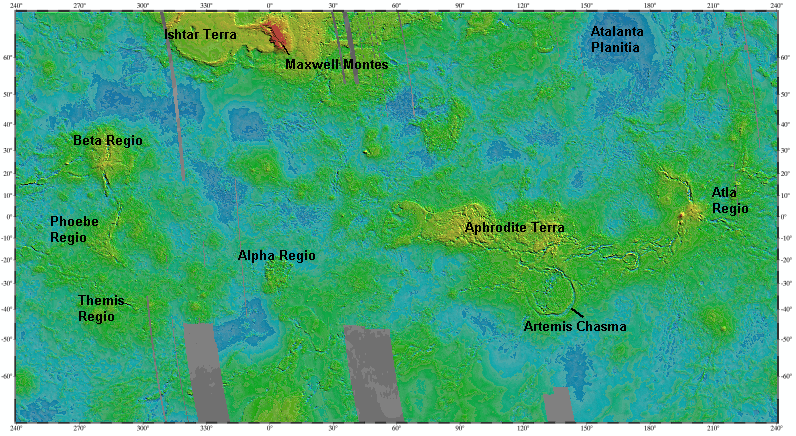
Figure 9. The surface
elevation of Venus is shown. The lowest regions are marked in purple,
the mid-elevations in green, and the highest parts in yellow. The gray
parts are where the mapping by the Magellan spacecraft was incomplete.
To see another global view of Venus's topography, click here. Actually,
this little movie is pretty good, since the elevation differences
between the rolling plains and the continents are more obvious. Image
and animation from NASA.
Are there active volcanoes on Venus? If you look at the surface (mainly in Magellan images), you see many volcanic structures, not only the usual sorts of things like hot spot volcanoes (similar to Hawaii) and basaltic volcanoes (similar to those in Iceland) but also all sorts of unique volcanic structures that aren't seen elsewhere in the solar system. Some of the structures are so unusual that we are having a hard time explaining their origins. This link will take you to some of the features that are seen. Evidence from the Venus Express mission seems to support the presence of currently active volcanoes, so things appear to be hot (in more ways than one) on Venus!
As with most objects in the solar system, there are a number of impact craters. However, the number of craters is much lower than that on the Moon or Mercury, and like on the Earth, there are no large, obvious impact features (the lowlands may be large impact features, but they also may not be). This tells us that there has been erosion at work covering up the big impacts that occurred early in the planet's history (as happened on the Earth). It is sort of strange that there are really only medium sized craters on Venus. Actually, the largest crater is Crater Margaret Mead, which is only 275 km across. There are no small craters, since objects that would normally produce them are destroyed as they travel through the atmosphere and get burned up.
The lack of any old craters and very few craters overall indicate that the surface of Venus has been redone (resurfaced) within a span of a few hundred million years. This is a relatively short time on geological time scales. Venus seems to have a very active surface if it can redo the landscape on such a short time scale. It is likely that there is current volcanism going on that helps in the erosion process.
While there appears to be volcanism, there does not appear to be evidence of organized plate tectonics or volcanic mountain chains like those seen with subduction on the Earth. There are strange volcanic structures such as coronae, arachnoids and pancakes located all over the place. It seems that the volcanism on Venus is more like the hot-spot type of volcanism associated with Hawaii or Yellowstone park, not that associated with plates. This sort of makes since, because it seems that the volcanoes are like those of the Hawaiian islands - rather flat volcanoes that are likely rather basaltic. The cause for this lack of plate tectonics isn't known for certain, but it may have something to do with composition differences or the thickness of the crust. Like the Earth, Venus is still a pretty active world.
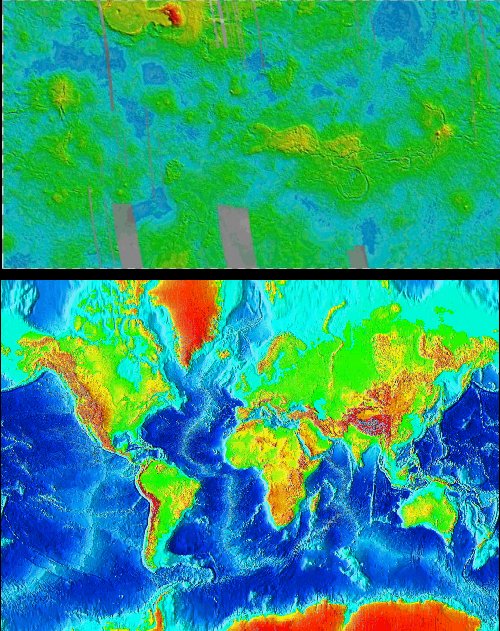 Figure 10. Click on the image to see a larger
version. A comparison of the surfaces of the Earth and Venus. The two
planets are almost the same size, so the images are on the same scale.
Notice how the continents on the Earth are well defined and organized,
while those on Venus appear to not be as clearly defined. The volcanism
on Venus is also quite a bit more random with mountains scattered all
over the place, not in nice, neat chains as on the Earth. This indicates
that plate tectonics are probably not in operation on Venus. Images
from NASA/NOAA.
Figure 10. Click on the image to see a larger
version. A comparison of the surfaces of the Earth and Venus. The two
planets are almost the same size, so the images are on the same scale.
Notice how the continents on the Earth are well defined and organized,
while those on Venus appear to not be as clearly defined. The volcanism
on Venus is also quite a bit more random with mountains scattered all
over the place, not in nice, neat chains as on the Earth. This indicates
that plate tectonics are probably not in operation on Venus. Images
from NASA/NOAA.
Obviously, Venus is a really fun place to visit! It has it all - a deadly atmosphere, acid rain, high enough temperatures to melt metal, air pressure strong enough to crush a truck and a lot of volcanism to cover everything with lava. This place is number one on my vacation list! (NOT!)